5 SECONDS OF SUMMER

Michael Clifford Fires Back at Abigail Breslin's Diss Track

Stars Most Stylish Selfie of the Week

Stars Most Stylish Selfie of the Week

GMAIL BLOCKED IN CHINA

5-Minute Outfit Idea

5-Minute Outfit Idea: An Effortless, Polished Look to Try This Weekend.

Facebook suffers outage

Facebook suffers outage affecting users worldwide!! .

Sunday, 2 November 2014

The Internet Archive Now Lets You Play 900+ Classic Arcade Games In Your Browser

The Internet Archive Now Lets You Play 900+ Classic Arcade Games In Your Browser

Greg Kumparak
TechCrunch


Looking for a nice little burst of nostalgia on this fine evening? Don’t feel like going through the process of installing MAME and lurking for ROMs, but still want to get your classic arcade on?
Back in December of last year, the Internet Archive (in their effort to backup the entire digital world, one bit at a time) launched a “Console Living Room” that offers up browser-friendly emulators for a pretty shocking number of consoles from the 70s/80s. Want to play some Atari 2600? Here you go. Sega Genesis? Yup!)

This weekend, they’ve introduced a whole new category: The Internet Arcade. 900+ classic arcade games, no quarters required.

It’s all a part of the JSMESS project, an effort to emulate as many systems as possible… in Javascript, of all languages. As they put it, they want to make “computer history and experiences” as embeddable as “movies, documents, and audio”.

Do they all work seemlessly? Nah — you’ll almost certainly spot a bug or two. Many are missing sound. But it’ll get better in time — and for now, just the fact that they got MAME working in a browser, sans any hefty plugins/runtime environments, is damned impressive.
One of JSMESS’ developers, Jason Scott, outlined the work he put into the Arcade-centric leg of the project in a blog post here.

(Pro tip: it can be a bit weird to figure out a game’s controls in MAME some times. The 5 key lets you insert a coin; the 1 key is usually the Player 1 start button. Arrows are usually used for directional stuff, with CTRL/ALT/SPACE used for the three primary buttons. Beyond that, you’ll have to mash buttons a bit to figure it out [or hit TAB to dive into the key configurations

It doesn't matter what your phone looks like

It doesn't matter what your phone looks like

David Pierce
The Verge


Phones are more beautiful than ever. Close your eyes and pick one: the sleek, rounded, comfortable iPhone 6; the stark, metallic Galaxy Note 4; the rugged, cohesive Xperia Z3; the curved, customizable Moto X. Walk into a carrier store or browse Amazon and you'll see nothing but remarkable feats of industrial design and engineering.

That moment, in the store, will be the last time your phone's design matters. Because you, like the overwhelming majority of smartphone buyers in 2014, are going to take your phone out of its box and put it directly into a case, where it will remain for the duration of your two-year contract.
It doesn't matter what your phone looks like. You'll never notice anyway.

If you buy a smartphone, there's an overwhelmingly large chance that you'll buy at least one case to go along with it. The NPD Group found in December of 2013 that 75 percent of smartphone owners use a case on the device — and seemed shocked to find that number wasn't higher. In the 12 months prior to the report, it found, phone case sales had grown 17 percent.

Almost everyone uses a case — and the numbers are growing

Apple, the bastion of good smartphone design, the company that has made beautiful smartphones longer than any other, is even more affected by this trend. 87 percent of iPhone users use cases, NPD found, and nearly half of those have used more than one case over the lifetime of their phone. After the launch of the iPhone 6 and 6 Plus, the thinnest and most carefully designed iPhones yet, accessory makers sold more cases than ever. Hell, even Apple wants you to hide its beautiful new designs behind a leather case.

Some case users do so to keep their phones safe. This impulse grows stronger as our phones get bigger, as the pane of glass ready to slide out of our hand and onto the floor gets harder and harder to hold. (I dropped my then-caseless iPhone 6 before I made it home from the store, and there's a ding that won't let me forget it.) It also grows stronger as our phones become more important to our lives; if my phone breaks I might lose my photos, my contacts, my notes, my high scores. My cellphone is now a precious object in every sense.

But cases have also appeared at fashion shows and in magazine spreads, designed by Marc Jacobs and Harris Tweed. In September, Vogue gave its recommendations of "the most luxe cases to buy now." We buy cases by Chanel and Louis Vuitton and Kate Spade, we bedazzle and be-tweed our simple metal rectangles. For many people, your phone isn't the fashion statement, the thing that says something about you as a person. That's what your case is for.

We lament the remarkable sameness of smartphones today, the fact that from across the room it's basically impossible to tell one big slab of black plastic from another. But maybe that's not a result of laziness on the part of manufacturers. Maybe it comes from an understanding that what consumers what is a blank canvas onto which to paint their personality. They may like one color now, but who's to say they'll still like it ten months into their two-year contract? What if it doesn't match my shoes?

Should you pick your case before you pick your phone?

You could almost argue that the way to shop for a phone is to pick the case you want and then find the phone that fits inside. Most smartphones work well anyway – you'd be hard-pressed to find one that doesn't do its job. Finding one that fits me, the way I see myself and want to be seen by others, is much harder.

Motorola was right to think that people want to customize their phones, but it missed the point: we don't want to customize our phones once, when we buy it. We want to customize them over and over again, redecorating our iPhones, the way we change our socks. When the New York Times talked to a bunch of hip teenagers about their shopping habits, the conversation kept coming back to the iPhone 6. "When you take pictures, people see your case," 15-year-old Caitlin Haywood told the Times.

That's why Verizon's new Droid Turbo is so interesting. This is not a well-designed phone: it's not sleek, not subtle, not terribly comfortable. It has a big DROID logo on the back that inexplicably also includes the amount of internal storage you selected, because apparently that's information you need to be always able to see. But it's an otherwise extraordinary piece of technology, and the real truth seems to be that Droid Turbo's success or failure won't hinge on how it looks with a case off, but what it can do with the case on. And it might also come down to whether or not Verizon has the right cases to go along with it.

Building a great smartphone is still really hard. Software matters. Durability matters. Camera performance matters. Battery life matters. But in the world we live in, the way your phone looks doesn't matter. Let's stop pretending it does.

Microsoft Band vs. Apple Watch vs. Jawbone Up vs. Fitbit Surge

Microsoft Band vs. Apple Watch vs. Jawbone Up vs. Fitbit Surge

John Patrick Pullen
Time 


Microsoft on Thursday announced its entry into the already-crowded fitness tracker space with Microsoft Band , a full-color touchscreen bracelet driven by cloud-powered data smarts. Looking to beat the Apple Watch to market, Microsoft's wristband is already available in the U.S., but that still puts it months, if not years, behind other fitness devices.
With so many options on the market, it’s difficult to tell which wearable has the upper hand — or upper wrist. Here’s how the four biggest names in fitness tracking stack up:

Capabilities: With an entire app ecosystem in the works, the Apple Watch would be the clear favorite here, potentially providing everything from Snapchat-like disappearing scribble messages to telegraphed heartbeats right out of the box. But there’s one major caveat: the digital timepiece won’t be available until early 2015. Jawbone Up, meanwhile, has been around since late 2011, is used by hordes to track sleep, movement, and even limited notifications, but is hindered by the fact that it has no digital display. And even though Fitbit Surge can control music, display notifications, and take a pulse, it’s also not yet on the market (though rumor has it that could change any day).


That leaves the Microsoft Band, which, like the Surge, has GPS and heart rate monitoring, all sorts of notification tools and other features. It also has a cloud-based data engine, the king of intelligence that has made Jawbone Up so beloved by its wearers. But doesn’t have any user data, yet, so there’s only so much that engine can tell users thus far. Still, with a mobile payment feature (at Starbucks, at least), a UV sensor, and voice controls if you’re using it with a Windows 8.1 phone, Microsoft Band sets itself apart from the pack.

Winner: Microsoft Band (until Apple is actually in the game)

Price: Microsoft seems to be using its vast riches to sell its band at a cut-rate price, because $199 is a heck of a deal for all the features the Band packs. In comparison, the Fitbit Surge is priced at $250, making it the company’s most expensive fitness tracker to date. The Jawbone Up, meanwhile, costs just $130, and the Apple Watch starts at $350 — but that’s the price for the Sport model, which lacks the sapphire crystal face and packs a rubber watch band. Apple hasn’t announced how much its mid- or high-end smartwatch will cost, yet.

Winner: Jawbone Up

Looks: Of course, this is completely subjective, but with 18-karat gold cases at the high-end and the same eye-popping graphic interface on the low-end, no other wrist-worn fitness tracker comes close to Apple Watch. For people who want a more subtle bobble, the Jawbone Up completely and totally lacks flash, which makes it go with just about any outfit. But come on, Apple’s effort even reinvented the watch band, for goodness sake. It’ll be as close to electronic jewelry as we'll have to date.
Winner: Apple Watch

Compatibility: For all Apple’s category-conquering successes over the past ten years, they will come up as a big loser when it comes to wearables, but that’s partially by design. Apple's wristwatch is only designed to work with its iOS ecosystem, nothing else, which means only iPhone owners would buy it, and even then, most of them won’t. Meanwhile, Jawbone isn't in the phone business, so they’ve made the Up compatible with Android and iOS so they can rope in as many smartphone users as possible. The Fitbit Surge boasts compatibility with more than 120 phones across Android, iOS, and Windows Phone. And in a new strategy for Microsoft, it's making its wearable compatible with Android and iOS, in addition to Windows Phone, of course. Determined to ensure Microsoft Band doesn’t meet the same fate of its doomed Zune media player, Microsoft hopes to woo users on competing platforms while rewarding Windows Phone users with additional features like Cortana, its voice-activated assistant.

Winner: Microsoft Band

Durability: Despite the fact that these wearables are aimed at active users, none of them are water- or dust-proof. They are all water-resistant, but that’s the difference between wearing them in the rain or dropping them in a puddle. Other wristbands that boast better durability than these four are on the market, so if that’s a concern, steer clear of all of these. But of the devices covered here, at least (some models of) the Apple Watch have sapphire crystal watch faces. This material is supposed to be hard and scratch proof, though that’s yet to be seen as it hasn’t gone through real-world testing by a wide range of users.

Winner: Apple Watch

Battery Life: The harder they run, the faster they burn — that’s not an official law of computing, but it should be. The Jawbone Up, which charges via USB and a little headphone jack on the bracelet, last up to 14 days. The Fitbit Surge holds a charge for up to five days after charging by its USB cable. The Microsoft Band boasts up to 48 hours of battery life with normal use, but activating its GPS functionality will suck down its juice much faster. And Apple’s only comment on the Apple Watch's battery life, so far, has been “charge nightly.” So take those times under advisement, because there’s nothing more useless than a dead wearable.

Winner: Jawbone Up

Smarts: From heart rates to calories burned, these wearables all collect scads of data, but it’s how they use the information that makes them valuable to users. For the Apple Watch, which again is not yet available, its forthcoming app ecosystem will likely make the device the smartest of them all. Until then, the Fitbit Surge, also not yet available, seemingly has that app ecosystem in place by connecting to many popular apps — possibly even ones already on your smartphone. The Microsoft Band hooks onto Microsoft Health, the company’s continuously-improving intelligence engine that also harvests info from other apps. Meanwhile, the Jawbone Up — which already has one of the smartest apps already on the market — is teeming with user data, telling its users what kinds of food to eat based on their energy level or last night’s sleep. In a way, the giants like Apple and Microsoft are relying on the smarts of Jawbone (and other companies like it) to drive their own devices. Jawbone is playing along for now, but don’t expect to get the full experience while wearing anything other than an Up.

Winner: Jawbone Up
As you can see, the fitness tracking race is moving so fast that this primer only scratches the surface. There’s no doubt that things will have change again, soon. But one thing will remain the same: The best fitness band is the one you’ll actually wear and use. Just ask any friend who’s already bought one, where is their band right now? Sadly, chances are it’s in a drawer somewhere tracking nothing at all.

Google wants you to easily share files between Android and iOS

Google wants you to easily share files between Android and iOS

Jon Fingas
Engadget 


As handy as services like AirDrop or Android Beam may be for shuffling content between nearby devices, they're platform-exclusive.
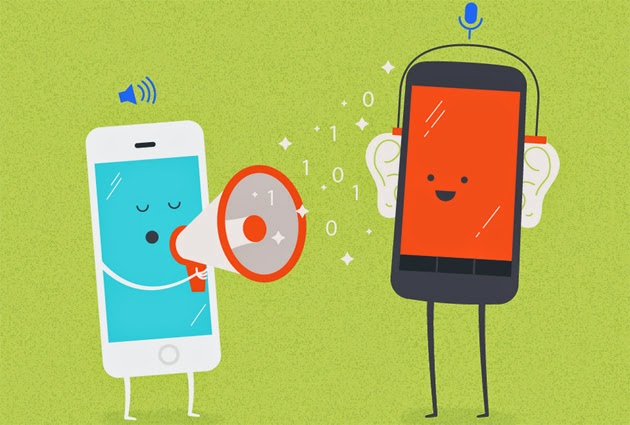
That's not much help if you want to share photos from your Android phone to an iPhone, or vice versa. However, Google may soon overcome that barrier. Android Police, Techaeris and GigaOM all have evidence of Copresence, a service that would let Android and iOS devices swap content over WiFi.
Reportedly, it uses location data (including Bluetooth) to set up the connection; after that, you can send directions, photos and other info without having to either bump devices or rely on cloud storage options like Google Drive or Dropbox. The technique shouldn't require a Google account, either.
It the details are accurate, Copresence should be available within a matter of weeks. Having said this, you shouldn't expect a file sharing Utopia. The feature is most likely to be limited to Google apps at first, and it's probably not going to be a system-wide feature on at least iOS -- you may have to be satisfied with exchanging files through a handful of programs. Still, that's better than the walled-off sharing you likely deal with today.

The iBox Nano 3D printer is almost as cheap as it is tiny

The iBox Nano 3D printer is almost as cheap as it is tiny

Timothy J. Seppala
Engadget


We've seen our share of 3D printers 'round these parts, but the iBox Nano could be one of the smallest yet. Its creators claim that the gizmo is not only the most diminutive resin printer, but also the most affordable in addition to being the word's quietest and lightest 3D printer to date. It achieves these bullet points in a few ways, namely by using LEDs instead of a DLP bulb for light (cuts down on size and noise) and acrylic parts for the actual printer body. The end result is a box measuring 4 x 3 x 8 inches and weighing in at three pounds. What's with going small, though? Well, the inventors say that, statistically, folks who buy bigger (and costlier) 3D printers tend to only print smaller objects anyway -- this is a matter of calculated efficiency.
Taking that theme even further, you can print without installing any software; everything is handled via WiFi and your web browser -- you can even print from Android and iOS devices. And if you're wondering what's actually possible with the Nano, like Gizmodo notes, the pitch video and Kickstarter page are rife with things like high-res chess pieces, rings and even a velociraptor head with individual teeth. Want one for custom trinkets of your own? All it takes is a $269 pledge and for the project to raise the rest of its $300,000 funding goal (about $92,000 as of this writing).
Kickstarter

A Halloween party where the costumes are 3D-printed

A Halloween party where the costumes are 3D-printed

Mat Smith
Engadget


Tokyo's FabCafe is a creator space dedicated to laser-cutting, 3D-printing and other things that give off the faint smell of burnt plastic and hardboard. It also just held its annual Halloween Party, but this year decided to add a new element: 3D-printed costumes. The "GRUE" projected accepted costume and headwear designs over the last month and a half (see some entries here), and then proceeded to print them out over the last few days. The results are pretty broad, but most of them share a common theme, aside from them all being spun out of a machine -- they're all white. Most were also pretty heavy -- and they're not really the kind of costumes you can wear a long time. Things get warm inside. We took a peek behind the preparation, and then got dressed up to attend.
Fabcafe

Formula 1 is testing a 'virtual safety car'

Formula 1 is testing a 'virtual safety car'

Jon Fingas
Engadget 


Safety vehicles are sometimes as dangerous to racing drivers as actual competition -- Formula 1 driver Jules Bianchi recently crashed into a recovery tractor sent out for an earlier accident, for instance. They may be less of an unintentional threat if a virtual safety car (VSC) trial at the US Grand Prix pans out. Instead of using a lead car to slow things down during yellow flags, the system relies on dashboard displays that tell racers to stay under a given speed limit; they face penalties if they go over. The technology is only being used in practice sessions this weekend, but the FIA is working with teams to determine just when VSC is viable for honest-to-goodness races.
That may take some time. While VSC is tentatively a success, some drivers are complaining that it's too difficult. They spend a lot of time staring at their dashboards rather than the road ahead, and they have to manage speed very carefully if they want to keep up when race organizers give the all-clear. Even so, the dash-based limit might be worth the hassles if it prevents one collision from leading to another.
[Image credit: Clive Mason/Getty Images]
BBC

Saturday, 1 November 2014

Find Out How Harry Styles Really Feels About Taylor Swift's '1989'

Find Out How Harry Styles Really Feels About Taylor Swift's '1989'


The One Direction singer revealed that he doesn't hold a grudge against his ex-girlfriend and thinks that 1989 is really good.

A fan encountered the "Steal My Girl" singer and asked how he felt about Taylor's new album. Before the car drove off, he said, "It's good, isn't it?"

They didn't ask how he feels about the songs  like "Out of the Woods" and "Style," but hopefully he doesn't mind that because her album is pretty amazing, so we guess we can just add him to the list of celebrities who love 1989

We've even heard that he's defended Taylor's new album because his friends have been criticizing the fact that she writes about her exes.

Friday, 31 October 2014

Android co-founder Andy Rubin to leave Google

Android co-founder Andy Rubin to leave Google

reuters

Google Inc said on Thursday that Andy Rubin, co-founder of its Android mobile business and head of its nascent robotics effort is leaving the company.
Rubin will start a company to support startups interested in building technology-hardware products, Google said in an emailed response for comment on a Wall Street Journal report about his move.
James Kuffner, a research scientist at Google and a member of the robotics group, will replace Rubin, the company added.
Last year, Google's browser and applications chief Sundar Pichai replaced Rubin as head of the Android division, bringing the firm's mobile software, applications and Chrome browser under one roof.
Rubin built Android into a free, open-source software platform now used by most of the world's largest handset manufacturers, from Samsung Electronics Co Ltd to HTC Corp.
(Reporting by Devika Krishna Kumar in Bangalore; Editing by Richard Chang)

Taylor Swift Dresses Like a Pegacorn For Halloween

Taylor Swift Dresses Like a Pegacorn For Halloween


Taylor Swift rocks a cute Halloween costume while making an appearance atThe Elvis Duran Z100 Morning Show at Z100 Studio on Friday (October 31) in New York City.
The 24-year-old singer was on the show to promote her new album 1989, which dropped on Monday!


“Cause, darling I’m a nightmare dressed like a PEGACORN. #HappyHalloween!”Taylor wrote on Instagram with a pic of herself standing in an elevator.
With her caption, 

Taylor is referencing her latest single “Blank Space,” which includes lyrics, “But you’ll come back each time you leave, ’cause, darling, I’m a nightmare dressed like a daydream.”

Daniel Radcliffe Has Never Been Trick-Or-Treating!

Daniel Radcliffe Has Never Been Trick-Or-Treating!


Harry Potter actor Daniel Radcliffe revealed during his interview on The Ellen Show that he has never been Trick-Or-Treating on Halloween. While Daniel said that he celebrated Halloween as a kid by going to parties and getting candy, he never went door to door dressed in a costume!
To make up for it Daniel dressed as Star Wars character Boba Fett during his appearance with Ellen DeGeneres. Ellen was also dressed up - as George Clooney and his new wife Amal Alamuddin. We love this!

Taylor Swift Brings Her Dancing Skills to 'Black Widow'

Taylor Swift Brings Her Dancing Skills to 'Black Widow'


It wouldn’t be Taylor Swift if she didn’t bust out some of her classic dance moves for a song.
While visiting On Air with Ryan Seacrest, the 24-year-old singer danced in her chair while Iggy Azalea and Rita Ora‘s hit song “Black Widow” played on the radio.

After showing off her moves, Taylor toldRyan that she loved Iggy and even got a tweet from her after 1989 dropped.
“is taylor swift going to be the first artist with a 2014 new release to go platinum? i hope so! if no1 does it ill be depressed 4 music,” Iggy tweeted.